Three Greatest Moments In Bunk Bed Online History


How to Shop Bunk Bed Furniture
Bunk beds are a great way to free up space in the children's room. There are many designs to pick from, ranging from staircase bunks, to desks that attach.
It can be a challenge to pick the right bunk bed. It's important to choose the right bunk bed that both you and your child both like. The correct size, style and construction is also essential.
How to Select the Best Bunk Bed
There are a lot of different bunk beds to choose from, but you have be sure to select the right one for your child. When choosing the ideal bunk beds for your child, be sure to consider the height of the bed and the dimensions of the room.
It should be safe and provide ample storage space. It should be safe and have plenty of storage space. It should also come with a mattress that is suitable to your child's age and needs.
It can be a challenge to choose the right bunk beds, but you must take into consideration the way your child uses them and what features they desire. You may want to consider adding a trundle as an extra sleeping space or drawers for storage.
Take into bunk beds uk for your bunk bed is constructed of. Some bunk beds are made from metal or wood, while others are constructed of wood. This is a great option for a child's bedroom however, it isn't as durable.
Bunk beds are a fantastic way to give your child their own space in the bedroom, and they can often be decorated to suit their personality. Giving your child their own space can make them feel more at home in their space and also give them the chance to express their individuality.
A bunk bed can be a budget-friendly and practical solution for your family, regardless of whether you're building your own home or renovating one you already have. It can be put in guest rooms or a child's room, or a cabin for vacation or.
childrens bunk beds or Ladders
Bunk beds are available in a variety of shapes, styles and configurations. It's important to choose a bunk bed that is compatible with your personal style and lifestyle, as well as your child's preferences.
For example, you may think about a full over twin bed or a full over full bunk bed that has stairs that double as storage space. These models are often more stylish and have plenty of space saving benefits.
Stairs are more likely be safer than ladders, specifically for children under the age of. They come with wider steps and a solid rail that is surrounded by your child as they climb. Some have grooves to keep your child from sliding.
A bunk bed with steps is an ideal option that is safe and secure for your children. It also helps to save space in the room and can be paired with a variety designs.
If you choose to buy a bunk bed that has ladders, make sure that the ladders are long enough and not too narrow. You can also install a cushion on the ladder to make it more comfortable.
Ladders may be easier to climb for children younger than but they are more difficult for older ones. They're also more expensive than stairs, which is why it's essential to decide if you're willing spend the money for a ladder.
Help your child learn how to use the bunk bed safely after it is put together. When climbing, it's essential to use both hands and to face the stairs or ladder. Also, you should supervise your child while they are in the bunk bed.
Age of the Child
The age of your child is a crucial aspect to consider when choosing a bunk bed. Children grow quickly and you should take into consideration their security, happiness, and sleeping habits when making choices regarding whether to purchase a bunk bed or not.
It is generally recommended that children be at least six years old to sleep in the top bunk. This is because children are more likely to capable of climbing up and down a ladder or remain on the bed at night.
It is important to take into account the maturity level of your child as well as their level of comfort with heights. If your child is afraid to be on a higher bunk, you may want to consider an option with a lower level.
Also, you need to consider the amount of available floor space in your bedroom. Make sure that the top and bottom bunks match the ceiling. You should leave at least 30 inches (2.5 feet) of space between the beds and the ceiling in order to prevent your child from hitting their head against the roof or the top bunk when they are sitting up.
Additionally, you should consider bunk beds that have additional safety features. A majority of bunk beds feature guard rails along the sides that keep children from falling off the top bunk or getting trapped in the bottom bunk.
Floor Space
If you have just one child or two kids sharing in a room bunk beds are a great way to reduce space. They free up floor space to accommodate other furniture, for example, a desk or play area, and also give children more space to move around the bedroom.
Bunk beds are available in different configurations. Some styles are built for guests, while others include a desk and storage underneath.
If you want to reduce the floor space, consider bunk beds that can be placed horizontally instead of vertically. This may not always be possible however it's a good place to start your search.
When deciding on the right bunk beds, it's important to consider your ceiling heights. The majority of standard ceilings are between 8 9' and 8' tall However, there are several loft and bunk bed designs with lower heights to fit in smaller space.
To make the most of a bunk bed, you must consider the most beneficial features and how they will be integrated into your bedroom design. For instance, you'll want to make sure that the top bunk is equipped with a ladder or guard rails as well as the bottom bunk has drawers underneath. You'll need to consider the ways your child uses the beds - will they sleep in the top bunk the majority of the time? Or will they need a desk with storage underneath the bed?
Style
Bunk beds are available in various designs and can be adapted to fit the bedroom of your child. They are also great for saving space in the room of your child especially if you're low on floor space and need to conserve it.
There are many types of bunk beds, from basic or standard models to lofts that have desks. You can also find bunk beds with built-in drawers or bookcases if you're looking for storage.
The most comfortable bunk beds are constructed using high-quality wood along with a sturdy frame and comfortable mattresses. The most suitable mattresses for bunk beds are are between 5 and 6 inches thick. This allows the rails that guard your bed to be visible from above the mattress's top and increase the safety.
If you are purchasing bunk beds and you are looking for safety features, such as an edging frame for the guardrail that is attached to the upper bed. This will keep your children from falling off the bed when they sleep.
Some bunk beds are equipped with a short ladder attached to the upper and bottom rails. This type of ladder lets your child to reach drawers under the bed, and can trundle without getting in their way.
You can pick from a variety of mattresses that provide your child with the comfort and support that he or she requires. There are many options available on the market. You can pick from latex or hybrid foam. You can also purchase a bunk bed with slides to provide your child with a thrilling experience when they wake up.
Safety
When purchasing a bunk bed it is crucial to consider safety. The safety features of bunk beds - such guard rails and a ladder - are designed to prevent injuries and accidents from falling, entrapment or structural failure.
A guardrail should be installed on all four sides of the top bunk. This barrier prevents children from falling and getting injured on the top bunk.
It should be set up in a way that the space between the guardrail and the sides of the bed is no greater than 3 1/2 inches. This will stop your child from rolling under the bed while they sleep.
Also, make sure that the guardrails are at least 16 cm taller than your mattress to stop your child from sliding out of bed. The mattresses on the upper and lower bunks must also be snugly across the four sides of bed and not be deeper than 15cm.
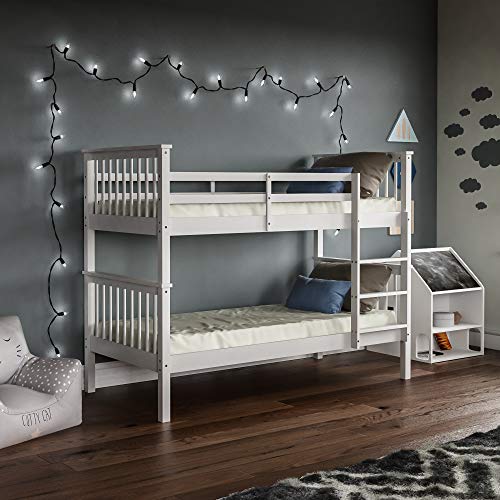
If you're looking for a bunk bed, make sure that it meets the stringent standards that are set by your country's safety commission. These regulations are applicable to all aspects of bunk bed construction and design - with a special focus on gaps and spaces, which can be easy for children's legs, heads and arms to become stuck in.